
If you’re wondering how to get legally married in Italy, here is the honest answer: yes, it is possible, but it is not the simple option.
Italy does allow foreign citizens to marry here legally. Still, the process usually involves paperwork, translations, and dealing with rules that can vary depending on your nationality and the specific town hall where you want to marry. Foreign nationals generally need a certificate showing there is no legal impediment to marriage, and some nationalities can use a certificate of legal capacity to marry instead.


Who can get legally married in Italy?
Foreign couples can legally marry in Italy, but the exact documents depend on nationality, residency, previous marriages, and where the ceremony will take place. Italy’s Ministry of Foreign Affairs says foreign citizens must provide a certificate of no impediment to marry under Article 116 of the Civil Code. For certain countries that follow the 1980 Munich Convention, a certificate of legal capacity to marry may be used instead. This is also why blanket advice online gets messy fast. A U.S. couple, a British couple, and a couple from Spain may not be following the exact same paper trail.

Civil ceremony
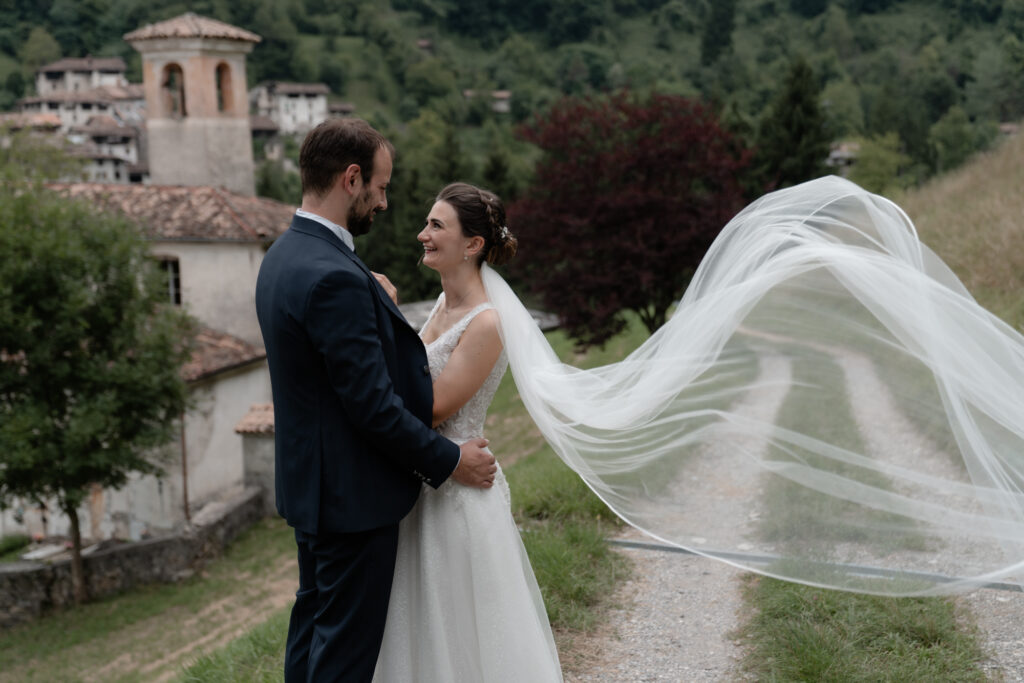
If you want a legally recognized wedding in Italy, the most straightforward route is usually a civil ceremony handled through the local Comune, meaning the town hall. Official guidance for U.S. citizens says couples must appear before the Civil Registrar of the Comune where the marriage will take place, bring two witnesses, and make a declaration of their intention to marry.
Some religious weddings can also be legally valid, but only if they meet the right requirements and are properly registered with the civil authorities. For example, the Italian consular guidance for U.S. citizens notes that if the ceremony is religious, the officiant must register the marriage with the civil registrar for it to be valid. So for planning purposes, think like this: if your priority is a legal wedding in Italy, your first real contact should be the Comune where you want to marry.
The documents you need
The exact checklist depends on your nationality and the town hall where you are getting married, but in most cases you will need a valid passport, a birth certificate, any documents related to a previous marriage ending if that applies to you, and a document confirming that you are free to marry, such as a nulla osta or equivalent.
For British nationals, the nulla osta is basically the certificate of no impediment. For U.S. citizens, the process can include a long form birth certificate, divorce or death records if relevant, a sworn declaration before a U.S. consular officer in Italy, and the marriage clearance document required by the Italian authorities.
And this is the part many couples underestimate: foreign documents often need to be translated into Italian and apostilled before they are accepted.
So no, this is not really a show up with passports and vibes situation. You want to leave enough time not only to gather the documents, but also to get everything translated and legalized properly.


How early should you start planning a legal wedding in Italy?
If you want to get legally married in Italy, I would start the process around 6 to 8 months in advance. That gives you enough time to contact the right Comune, understand exactly what they need for your nationality, gather the documents, and deal with translations, apostilles, or any appointments that may need to happen before the wedding.
Depending on your nationality and where you are marrying, part of the process may also need to happen in Italy before the ceremony itself. In many cases, you will need to appear before the Civil Registrar of the chosen town hall before the wedding, and if you are having a civil ceremony, you will also usually need two witnesses on the day.
So yes, if you are doing the legal route, it is often a good idea to arrive a few days early. Not for the romance. For the paperwork.
Is the ceremony in Italian?
Usually, yes.
Civil marriage in Italy is generally carried out through the Italian civil system, and consular guidance for foreign couples often warns that language support may be needed when the couple does not speak Italian. While exact arrangements vary by town hall, many couples end up needing an interpreter or translator to satisfy the local requirements. This is one more reason to check directly with the Comune early.
After the wedding, get your certificate sorted properly
Once you are married, you will want official copies of the marriage certificate and, if needed for use back home, the right legalization. Italian consular guidance for U.S. citizens suggests requesting a copy of the marriage certificate from the Comune before leaving Italy and having it apostilled at the local Prefettura. Italy’s Ministry of Foreign Affairs also explains that foreign marriage documents often need legalization and translation when they are being registered across systems.
This is one of those details future you will be very happy you handled properly.

Is getting legally married in Italy worth it?
Honestly, it depends on you.
If making it official in Italy is deeply important to you, then yes, it can absolutely be worth the extra logistics. There is something very special about doing the legal part in the same place where the whole experience happens.
But if what you really want is freedom, flexibility, and a day that feels emotionally rich without the admin spiral, a symbolic ceremony in Italy is often the easier option. The legal route is real, possible, and beautiful, but it is also the more structured one.
My honest advice
If you are set on getting legally married in Italy, start with the Comune first, not Pinterest. Ask them exactly what they require for your nationality, your residency status, and your preferred ceremony type. Then cross check that with your embassy or consulate. Official UK guidance says to use the government marriage abroad service to see what documents you need, and Italian official sources repeatedly point couples back to the local town hall for the final checklist.
That will save you a lot of confusion, and probably a few dramatic tabs open at midnight.
Planning a legal elopement in Italy
If you are dreaming of getting legally married in Italy and want help shaping the day around the paperwork, not the other way around, that is where good planning support matters. The legal side needs structure, but the experience can still feel calm, beautiful, and very you.
I help couples plan elopements in Italy with real thought behind the flow of the day, the location, the practical details, and what actually makes sense. So if you are trying to decide between legal and symbolic, or you already know you want the legal route and want someone local in your corner, get in touch and tell me what you have in mind.